 logo
logo



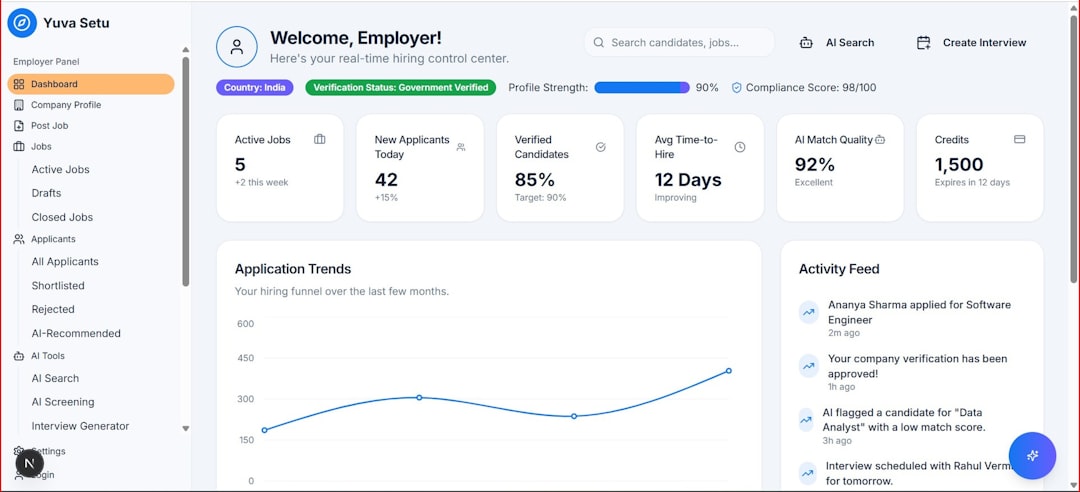
For large organizations, customer relationship management is no longer a digital address book. An enterprise CRM is a central operating layer for sales, marketing, service, analytics, governance, and customer data management across regions, business units, and compliance environments. Choosing the right platform requires a serious evaluation of scalability, integration depth, security controls, automation, reporting, and total cost of ownership.
TLDR: Enterprise CRM platforms help large organizations unify customer data, standardize processes, and improve revenue visibility across complex teams. For example, a global B2B company with 5,000 sales and service users may use CRM analytics to reduce duplicate accounts by 30% and shorten sales forecasting cycles from two weeks to two days. The best platform depends on whether the organization prioritizes customization, industry functionality, AI, compliance, or integration with existing systems.
Unlike small-business CRM tools, enterprise platforms must support thousands of users, multiple permission layers, sophisticated workflows, and reliable data synchronization with ERP, finance, ecommerce, contact center, and business intelligence systems. The following 15 platforms are widely considered by large organizations because they offer mature capabilities, enterprise support, and strong ecosystems.
1. Salesforce Sales Cloud
Salesforce Sales Cloud is one of the most recognized enterprise CRM platforms, with extensive customization, automation, reporting, and partner integrations. It is particularly strong for organizations that need configurable sales processes, advanced pipeline management, and a large app marketplace. Salesforce is often chosen by multinational companies because it can scale across departments and geographies, although implementation governance is essential to avoid complexity.
2. Microsoft Dynamics 365 Sales
Microsoft Dynamics 365 Sales is a strong fit for enterprises already invested in Microsoft 365, Azure, Power BI, and Teams. Its value lies in deep integration with familiar productivity tools and flexible configuration options. Large organizations often appreciate its security model, data architecture, and ability to connect CRM processes with finance, operations, and customer service modules.
3. SAP Sales Cloud
SAP Sales Cloud is designed for organizations that need CRM tightly connected with enterprise resource planning, supply chain, and back-office data. It is often considered by manufacturers, distributors, and global companies with complex pricing, product catalogs, and account hierarchies. Its main strength is enterprise-grade process alignment, especially where SAP ERP is already in place.
4. Oracle Fusion Cloud CX
Oracle Fusion Cloud CX provides sales, marketing, service, commerce, and customer data capabilities in a broad enterprise suite. It is suitable for organizations seeking a single vendor for customer experience and operational systems. Oracle’s strengths include analytics, data management, and integration with other Oracle cloud applications.
5. HubSpot Enterprise CRM
HubSpot Enterprise has evolved from a marketing-focused platform into a broader CRM suite for sales, service, content, operations, and customer engagement. While traditionally popular with mid-market companies, its enterprise tier is increasingly used by larger organizations that value usability, fast adoption, and strong marketing automation. It may be especially useful for business units that need speed and simplicity without excessive technical overhead.
6. Zoho CRM Enterprise and Ultimate
Zoho CRM offers a broad set of CRM capabilities at a comparatively accessible price point. Its enterprise and ultimate editions include automation, analytics, customization, AI assistance, and omnichannel communication. For large organizations, Zoho may be attractive when cost control is important, though careful assessment is needed for highly complex multinational deployments.
7. ServiceNow Customer Service Management
ServiceNow Customer Service Management is not a traditional sales CRM, but it is highly relevant for enterprises focused on service operations. It connects customer issues with internal workflows, IT, field service, and operational teams. Large organizations use it to reduce case resolution times, improve accountability, and link customer service to enterprise service management.
Image not found in postmeta8. Zendesk Suite Enterprise
Zendesk Suite Enterprise is widely used for customer support, ticketing, knowledge management, messaging, and customer experience analytics. It is a strong option for organizations with high-volume service teams that need fast deployment and intuitive agent tools. While it is not a full sales CRM in the same sense as Salesforce or Dynamics, it plays a significant enterprise CRM role in service-led organizations.
9. Freshsales Suite Enterprise
Freshsales Suite, part of the Freshworks ecosystem, combines sales automation, marketing, chat, telephony, and AI-assisted insights. It is positioned as a practical option for organizations that want modern CRM functionality without the heavier implementation burden of some legacy enterprise suites. Large teams may find it useful for standardizing sales engagement and improving lead management.
10. SugarCRM
SugarCRM emphasizes flexibility, automation, and customer intelligence. It is often selected by organizations that want more control over CRM configuration and deployment choices. SugarCRM can be a serious contender for enterprises with unique workflows, especially when they need strong process automation and a more tailored CRM environment.
11. Pega CRM
Pega CRM is known for decisioning, workflow automation, and case management. It is often used by banks, insurers, telecom companies, and other large organizations with complex customer journeys. Pega’s strength is its ability to coordinate decisions and processes across channels, making it valuable where customer interactions must be guided by rules, compliance requirements, and real-time context.
12. Creatio
Creatio provides CRM and workflow automation with a strong emphasis on no-code and low-code configuration. Enterprises use it to build custom processes across sales, marketing, and service without relying entirely on traditional software development. It can be especially relevant for organizations that need agility and want business teams to participate directly in process design.
13. Adobe Experience Cloud
Adobe Experience Cloud is not a conventional CRM centered on sales pipeline management. Instead, it excels in marketing, personalization, content, analytics, customer data, and digital experience orchestration. Large consumer brands often use Adobe alongside a sales or service CRM to create personalized campaigns and analyze customer behavior across digital touchpoints.
14. monday CRM Enterprise
monday CRM Enterprise offers CRM functionality within the flexible monday.com work management environment. It can be effective for organizations that want customizable boards, workflow visibility, and collaboration around sales or client management processes. For enterprises, its appeal lies in usability and adaptability, particularly for teams that find traditional CRM interfaces too rigid.
15. Insightly Enterprise
Insightly Enterprise combines CRM with project management and delivery tracking. This makes it useful for organizations where customer relationships continue beyond the sale into implementation, onboarding, and account delivery. Professional services firms, technology providers, and project-based businesses may benefit from having sales and post-sale work connected in one platform.
How Enterprises Should Evaluate CRM Platforms
The best enterprise CRM is not simply the platform with the longest feature list. Large organizations should assess whether the system supports both current operations and long-term transformation. A serious selection process should include stakeholders from sales, marketing, service, IT, legal, finance, data governance, and regional leadership.
- Scalability: Can the CRM support thousands of users, high data volumes, and multiple business units?
- Integration: Does it connect reliably with ERP, data warehouses, ecommerce platforms, communication tools, and identity management systems?
- Security and compliance: Are role-based permissions, audit trails, data residency, encryption, and regulatory controls sufficient?
- Automation: Can it standardize approvals, lead routing, forecasting, service escalation, and account planning?
- Analytics: Does it provide accurate dashboards, predictive insights, and executive-level reporting?
- User adoption: Is the interface practical for daily use, or will teams work around it in spreadsheets?
- Total cost: Beyond licenses, what are the costs of implementation, customization, training, support, and ongoing administration?

Common Enterprise CRM Risks
CRM projects fail most often because of weak governance, poor data quality, unclear ownership, or excessive customization. A platform cannot fix inconsistent sales processes by itself. Before implementation, enterprises should define account hierarchies, pipeline stages, customer data standards, reporting requirements, and integration priorities.
Data migration deserves particular attention. Large organizations often have duplicate customer records, incomplete fields, outdated contacts, and conflicting regional definitions. If bad data is moved into a new CRM, the organization may simply modernize its confusion rather than solve it.
Final Perspective
Enterprise CRM selection should be treated as a strategic business decision, not just a software purchase. Salesforce, Microsoft Dynamics 365, SAP, and Oracle are often shortlisted for broad enterprise transformation, while platforms such as ServiceNow, Zendesk, Adobe, Pega, Creatio, and HubSpot may be stronger choices for specific operating models or customer engagement priorities.
The right CRM will provide a trusted customer record, improve coordination across departments, and give leadership more accurate visibility into revenue and service performance. The most successful organizations choose a platform that matches their operating complexity, then support it with disciplined governance, clean data, executive sponsorship, and continuous improvement.